
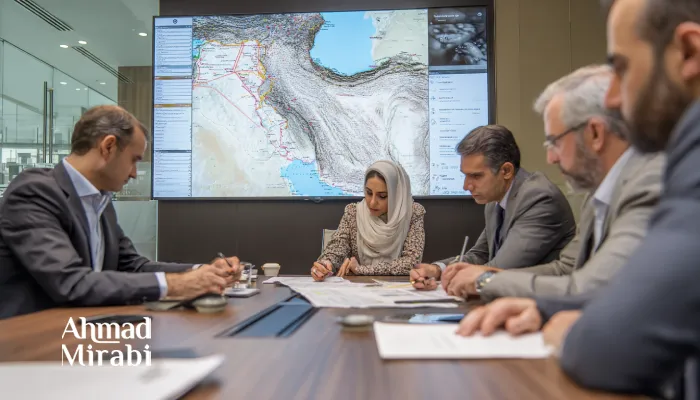
Understanding how decisions are made within Iranian organizations is essential for foreign leaders looking to operate or partner in Iran. While Iran’s business environment is modernizing, its decision-making culture is shaped by a unique blend of historical tradition, interpersonal expectations, and structural dynamics. These elements influence negotiations, partnership development, leadership communication, and the pace of execution. Instead of relying on stereotypes or abstract cultural summaries, this article offers a practical, case-based look at how decisions unfold in real Iranian business settings—and what foreign leaders can do to collaborate more effectively.
A Scenario-Based Insight: How a Simple Proposal Evolves in Iran
Imagine a European logistics company presenting a partnership proposal to an Iranian distributor. The initial meeting seems positive, but the Iranian side requests “a few days to discuss internally.” For many foreign executives, this may signal hesitation. In reality, the proposal is entering a multi-layered evaluation phase involving hierarchy, trust networks, and internal alignment. The final decision is rarely made in the room—it emerges through relational channels that operate alongside formal structures.
This scenario highlights the importance of patience, relationship-building, and indirect communication when working with Iranian stakeholders.
Relational Trust as the Cornerstone of Decision-Making
Trust—built gradually through repeated interactions—is a foundational element in Iranian business culture. Decisions often depend less on written documentation and more on perceived reliability, personal integrity, and long-term intentions.
Foreign leaders should expect:
- More emphasis on personal rapport than contractual details
- Meetings that prioritize conversation and connection before negotiation
- Decisions that accelerate once trust is established
The relationship often is the strategy. Without it, even economically attractive proposals move slowly.
Hierarchy and Consensus: A Dual Decision Structure
Iranian organizations typically follow a hybrid decision-making pattern that blends formal hierarchy with informal consensus-building. Even when a CEO has authority to approve a project, he or she may seek alignment across internal networks to avoid friction.
This creates unique dynamics:
- Senior voices hold weight, but group acceptance matters
- Decisions may appear delayed while internal consensus forms
- Changing direction mid-project is uncommon once alignment is established
Foreign leaders who recognize and respect this dual structure will navigate organizational dynamics more effectively.
Indirect Communication and the Power of Implication
Iranian communication style often leans toward subtlety rather than direct confrontation. This affects how feedback, rejection, or concerns are expressed.
Foreign leaders should be attentive to:
- Polite phrasing that may carry deeper meaning
- Signals such as pauses, softened responses, or shifts in wording
- A preference to avoid “no” unless absolutely necessary
Misinterpreting these signals can lead to unrealistic expectations about project timelines or approval status.
Case Example: When a “Yes” Means “Not Yet”
A North American tech startup secured what seemed like a clear verbal agreement with a mid-size Iranian partner. Emails were positive, but implementation never moved forward. The Iranian team had internally identified concerns—budget timing, market risk, and competitive pressure—yet felt expressing them directly might strain the relationship.
Understanding this nuance helps foreign leaders set more accurate expectations and create follow-up strategies that invite openness.
The Pace of Decision-Making: Fast Once Trust Is Solid
While early stages require patience, decision-making in Iran can accelerate rapidly once confidence is built. It is not uncommon for Iranian executives to:
- Approve projects quickly once relationships stabilize
- Make bold decisions when they trust the partner’s intentions
- Demonstrate remarkable flexibility under strong rapport
For foreign leaders, this means the goal is not to push for speed—it’s to build the foundation that enables speed.
The Influence of Risk Perception and Uncertainty
Iran’s economic fluctuations and regulatory shifts make Iranian leaders particularly sensitive to risk. Decision-making often incorporates:
- Scenario planning
- Informal consultations with trusted advisors
- A cautious approach toward commitments without strong guarantees
Foreign executives who demonstrate stability, transparency, and long-term partnership intent will be viewed as lower-risk collaborators.
How Foreign Leaders Can Adapt Their Approach
Here are practical adjustments that drive better outcomes:
- Invest time before negotiating
Build rapport over multiple interactions before discussing details. - Ask open, indirect questions
This encourages more honest sharing without pressure. - Provide step-by-step partnership paths
Iranians appreciate phased commitments that reduce initial risk. - Acknowledge hierarchy while promoting collaboration
Address key decision-makers respectfully while involving the broader team. - Follow up consistently—but gently
Assertiveness works best when balanced with cultural sensitivity.
A Cultural Framework for Understanding Decisions
Instead of viewing Iranian decision-making as slow or opaque, foreign leaders can use this simple framework:
Trust → Alignment → Assurance → Execution
- Trust fuels cooperation
- Alignment ensures internal harmony
- Assurance reduces perceived risk
- Execution becomes efficient once the first three are met
This perspective helps leaders anticipate progression and design more effective engagement strategies.
Frequently Asked Questions
1.Do Iranian decision-makers value written agreements?
Yes, but written agreements reinforce—rather than replace—relational trust.
2.Why do decisions seem to take longer in early stages?
Internal alignment and risk assessment happen behind the scenes before commitments are made.
3.Is direct criticism acceptable in meetings?
It’s generally softened or expressed indirectly to maintain respect and harmony.
4.Do Iranian companies prefer long-term or short-term collaborations?
Partnerships with long-term stability and mutual commitment are preferred.
5.How should a foreign leader follow up after a meeting?
Politely, consistently, and without implying impatience.
Conclusion
Iranian decision-making culture is not simply a set of customs—it is a strategic system shaped by trust, hierarchy, interpersonal respect, and risk awareness. Foreign leaders who approach Iran with cultural intelligence, relational patience, and adaptive communication will experience more successful negotiations, smoother partnerships, and faster execution once mutual confidence is built.
Dr. Ahmad Mirabi is a leading business and branding consultant with over two decades of experience helping entrepreneurs and organizations grow strategically. His work focuses on leadership development, brand strategy, and sustainable business transformation.